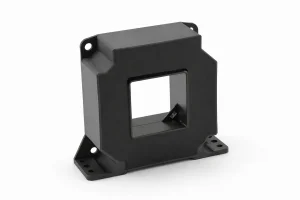
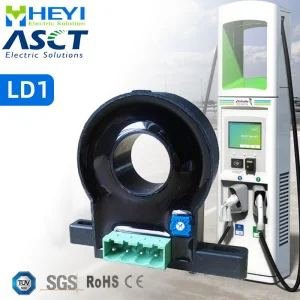
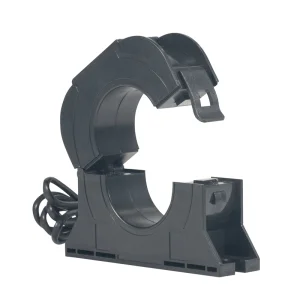
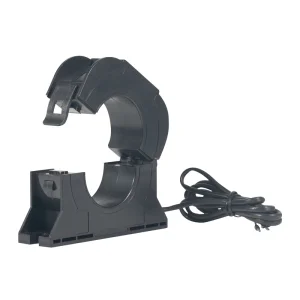
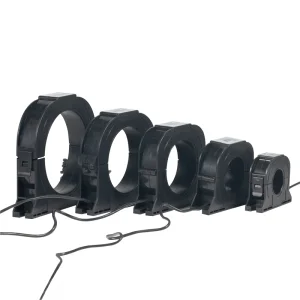
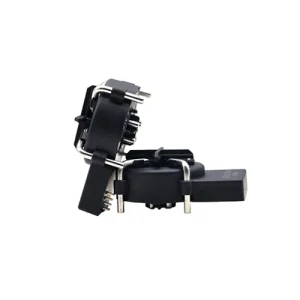
Heyi/Asct Type B Residual Current Sensors for Charging Pile System

Still deciding? Get samples of $ !
Request Sample

Product Description

Basic Specifications

Model NO.
ASCT Type B
Process
SemiConductor Integrated
Material
Ceramics
Accuracy
0.5G
Application
Switching Power Supply
IP Rating
IP22
Certification
CE
Specification
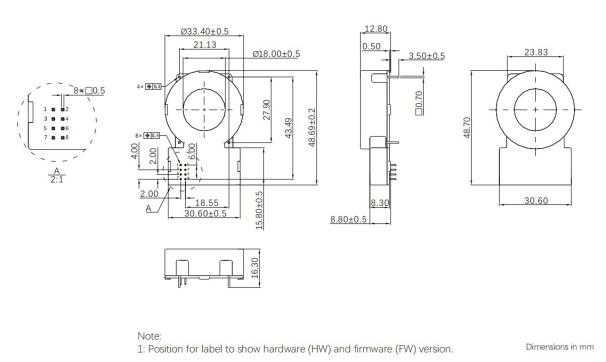
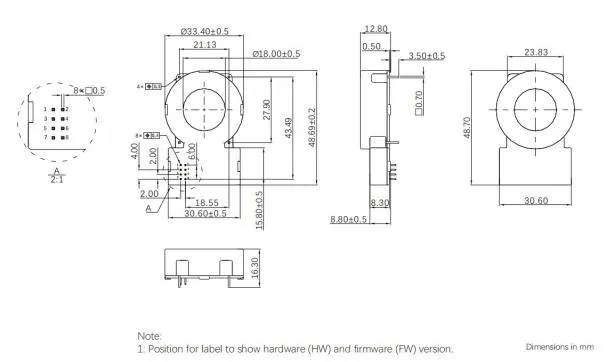
34.4MM*49MM(HYCA-01)

Product Description

Residual current device sensor (RCDs) or residual current sensors are indispensable safety components used to protect against electrical and ground faults in a variety of applications. Their high sensitivity, fast tripping mechanisms and compatibility with a variety of electrical systems make them vital for ensuring electrical safety in residential and industrial environments and preventing accidents and damage.

Standards and Regulations:
Residual current device sensor are subject to various national and international standards and regulations that define their installation requirements and performance standards. HYCA-F03 complies with IEC62752, IEC62955, UL2231 standards.

🛡️ Safety First

Designed to prevent electric shock, electrical fire, and equipment damage by monitoring current imbalances.

Rapid Tripping

Interruption occurs within milliseconds when a ground fault or leakage is detected to prevent accidents.

🔍 High Sensitivity

Able to detect small current imbalances in the milliamp (mA) range, ensuring early detection of faults.

⚙️ Self-testing

Includes mechanisms to ensure continued functionality through periodic automated tests.

Typical Applications

  • Electric Vehicle (EV) Charging: Prevents ground faults and leakage hazards in residential and public stations.
  • Residential Wiring: Protects circuits in kitchens, bathrooms, and outdoor areas via electrical panels.
  • Industrial Facilities: Crucial for manufacturing sites and construction areas to protect personnel.
  • Renewable Energy: Used in photovoltaic (solar) and wind power systems to respond to ground faults.
  • Marine & Pools: Protects against shock hazards in wet and conductive environments.

Technical Parameters

Model Standards DC Trigger Threshold AC Trigger Threshold
HYCA-03/PD IEC62752 6mA 30mA
HYCA-03/MD IEC62955 6mA /
Absolute Maximum Ratings
Parameter Unit Spec Conditions
Load dump overvoltage V 32 400ms
Over-voltage V 25 1 minute
Reverse polarity V -16 1 minute
Max supply voltage V 18 Continuous
Insulation resistance 500 500 V

System Diagram

Residual Current Sensors Diagram for Charging Pile System

Frequently Asked Questions

Q1: What is the main purpose of a Type B residual current sensor? A1: It is designed to detect AC, pulsating DC, and smooth DC residual currents, providing comprehensive protection for applications like EV charging and frequency converters.
Q2: Which international standards do these sensors comply with? A2: Our sensors comply with IEC62752, IEC62955, and UL2231 standards, ensuring global compatibility and safety compliance.
Q3: How fast does the sensor trip when a fault is detected? A3: The trip mechanism is rapid, typically interrupting the circuit within milliseconds to minimize the risk of electric shock or equipment damage.
Q4: Can these sensors be used in outdoor or harsh environments? A4: Yes, they are designed with resilience in mind and feature an IP22 rating, making them suitable for industrial and outdoor infrastructure like charging piles.
Q5: What is the difference between the PD and MD models? A5: The HYCA-03/PD model detects both 6mA DC and 30mA AC thresholds per IEC62752, while the HYCA-03/MD focuses on the 6mA DC threshold according to IEC62955.
Q6: Is self-testing available on these models? A6: Yes, modern versions include self-testing mechanisms that periodically check functionality and trip the circuit if any internal failure is detected.

Related Products