Choosing the best transformer type in 2026 requires more than comparing ratings, prices, and efficiency figures. Engineers must examine heat behavior under real operating conditions. A transformer may appear stable in a cool workshop, yet behave differently beside a furnace, in direct sunlight, or inside a poorly ventilated enclosure.
How does temperature affect the working stability of transformers? It affects insulation aging, oil viscosity, winding resistance, cooling performance, and allowable load. Higher temperatures accelerate insulation deterioration. They also increase copper losses and winding hot-spot temperatures. Even small cooling problems can create serious thermal stress over time. Dry-type transformers face similar concerns, although their air circulation and insulation systems differ from oil-immersed designs.
Transformer engineer John J. Winders states, “The life of a transformer is determined by the life of its insulation.” This principle remains practical for modern equipment selection. Temperature sensors, thermal models, dissolved-gas analysis, and automatic cooling controls can reveal hidden risks. However, monitoring does not replace sound design. A sensor may report normal oil temperature while a local winding hot spot develops.
That detail matters.
This guide compares transformer types through thermal stability, application suitability, maintenance needs, and efficiency. It considers distribution, dry-type, oil-immersed, cast-resin, and high-efficiency transformers. Field experience shows that no single design suits every site. A technically impressive unit can still underperform when airflow, ambient temperature, harmonics, or loading patterns are ignored. Some assumptions will be challenged here, because temperature calculations are useful, but never perfectly represent every operating condition.
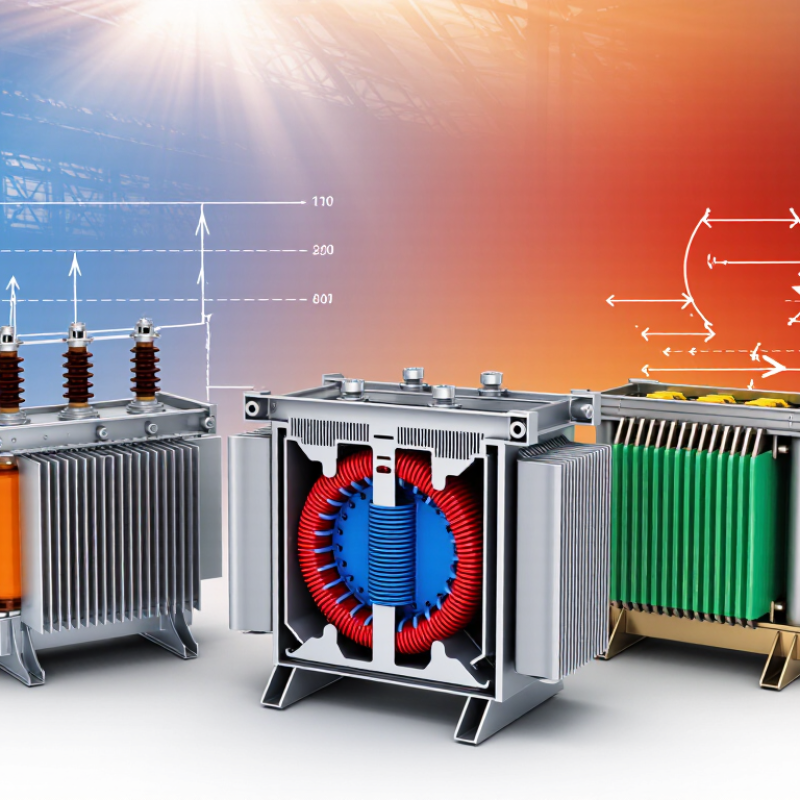
Transformer Types in 2026: Oil, Dry-Type, Cast-Resin, and Smart Designs
2026 Best Transformer Types: How Temperature Affects Stability?
Transformer selection in 2026 depends on load, location, and temperature control. Oil-filled transformers handle heavy loads well and dissipate heat efficiently. They suit substations and outdoor installations with proper containment and inspection. Dry-type transformers avoid liquid leaks and work well inside commercial buildings. However, blocked ventilation can raise winding temperatures quickly.
Cast-resin transformers resist moisture, dust, and many harsh indoor conditions. Their solid insulation supports safer operation, but repeated thermal cycling may create small stresses. Smart transformer designs add temperature sensors, load monitoring, and remote alerts. These tools can reveal hot spots before insulation damage becomes visible. In practical inspections, a few degrees matter. A loose connection may create uneven heating, even when average temperature looks normal. Oil quality, fan operation, and ambient heat also affect stability. No design is perfect.
Tips: Check temperature records during peak demand, not only during routine visits. Keep cooling paths clean and verify sensor accuracy. For oil-filled units, inspect fluid condition and signs of leakage. For dry-type and cast-resin units, measure airflow around the enclosure. Smart data needs human review; an alert can be useful, but it can also be wrong. A simple infrared scan may expose what software misses. Allow a safety margin for unusually hot days.
How Temperature Rating Works: IEC 60076’s 65 K Winding-Rise Limit
How Temperature Rating Works: IEC 60076’s 65 K Winding-Rise Limit
In transformer design, the 65 K winding-rise limit is a temperature difference, not an absolute temperature. IEC 60076 commonly uses it as a reference for liquid-immersed transformers under specified test conditions. If the surrounding air reaches 40°C, a 65 K rise gives an average winding temperature near 105°C. The winding’s hottest point can be higher.
This distinction matters for stability. Excess heat accelerates insulation aging, reduces material strength, and can increase moisture-related risks. The 65 K value applies at defined load, cooling, and ambient conditions. It does not guarantee safe operation during blocked ventilation, overloads, or unusually hot weather. In practice, engineers review hot-spot temperature, oil circulation, thermal sensors, and daily load patterns. Field conditions rarely behave perfectly. That is easy to underestimate.
Tips: Check the transformer’s cooling class and rated ambient temperature before comparing data. Record top-oil and winding temperatures during peak load. Leave ventilation paths clear. A small temperature rise can reveal a serious cooling problem. Also, do not treat 65 K as a universal number; the applicable IEC requirements and transformer design must be verified from certified test documents.
2026 Best Transformer Types: How Temperature Affects Stability — How Temperature Rating Works: IEC 60076’s 65 K Winding-Rise Limit
| Transformer Type |
Typical Cooling Method |
Common Winding-Rise Reference |
Typical Insulation Thermal Class |
Temperature Stability Characteristics |
Best-Fit Application |
| Oil-Immersed Distribution Transformer |
ONAN: Oil Natural, Air Natural |
65 K
common IEC design reference |
Usually Class A or higher system components |
Oil provides effective heat transfer and insulation. Stability depends on oil temperature, load profile, ambient temperature, moisture, and cooling-surface condition. |
Utility distribution, commercial facilities, and general grid service |
| Oil-Immersed Power Transformer |
ONAF or OFAF: Forced Air and/or Forced Oil |
Project-specific
often based on IEC 60076 thermal limits |
Selected according to the insulation system and design temperature |
Forced cooling increases heat-removal capacity and continuous loading capability, but fan or pump failure can rapidly reduce thermal margin. |
Substations, generation plants, industrial power systems, and high-load networks |
| Cast-Resin Dry-Type Transformer |
AN: Air Natural; AF: Air Forced when specified |
Often designed around a
100 K rise for Class F insulation |
Class F is common; Class H may also be used |
No insulating liquid is present. Resin protects the winding from moisture and contaminants, while heat dissipation is strongly affected by ventilation and enclosure design. |
Indoor substations, hospitals, buildings, tunnels, and locations with fire-safety requirements |
| Open-Wound Dry-Type Transformer |
AN or AF |
Depends on insulation class and IEC 60076-11 design |
Class B, F, or H designs are used |
Cooling performance is directly influenced by air temperature, dust accumulation, clearances, and enclosure ventilation. Temperature changes can affect insulation ageing and terminal connections. |
Indoor industrial and commercial installations with controlled environments |
| Amorphous-Core Distribution Transformer |
Usually ONAN for oil-immersed designs |
Typically specified using the applicable IEC 60076 thermal limit |
Depends on the complete insulation system |
The core can reduce no-load losses, but winding temperature and insulation ageing remain governed by load current, ambient temperature, oil condition, and hot-spot temperature. |
Energy-efficient distribution networks with significant no-load operating time |
How the 65 K winding-rise limit is interpreted:
A temperature rise of 65 K means the average winding temperature is 65 °C above the specified reference ambient temperature; a temperature difference in kelvins has the same numerical size as a difference in degrees Celsius. For example, with a 40 °C reference ambient, a 65 K winding rise corresponds to an average winding temperature of approximately 105 °C. The winding hot-spot temperature can be higher than the average winding temperature.
Important design note:
The exact permissible temperature rise depends on transformer construction, rated power, cooling method, insulation system, service conditions, and the applicable edition of IEC 60076. IEC 60085 thermal classes describe insulation-system temperature capability; they do not automatically define the transformer’s allowable winding rise. Manufacturer documentation and the applicable project specification should be checked for final selection.
Reference framework: IEC 60076 series for power transformers, including liquid-immersed transformer temperature-rise requirements and dry-type transformer requirements; IEC 60085 for electrical insulation thermal classes.
Stability Comparison: Oil Cooling vs Class 155/180 Dry-Type Insulation
2026 Best Transformer Types: How Temperature Affects Stability?
Oil-cooled transformers usually manage heat more smoothly during continuous loading. Oil transfers winding heat to radiators, while natural or forced circulation supports stable temperature gradients. IEEE Std C57.91-2011 models cellulose insulation aging through winding hot-spot temperature. At about 120°C, the calculated aging rate can reach roughly 2.7 times the reference rate. A few hot degrees matter.
Class 155 and Class 180 dry-type transformers use solid insulation systems rated for 155°C and 180°C thermal endurance, respectively. IEC 60076-11:2018 requires dry-type transformers to undergo temperature-rise and insulation tests, but the class rating is not a permission for unlimited overheating. Ventilation, dust, enclosure design, and airflow strongly influence stability. A blocked air path can raise the winding hot spot quickly. Dry does not mean thermally risk-free.
CIGRE Technical Brochure 642, Transformer Reliability Survey, identifies insulation aging, thermal stress, and accessory failures as recurring reliability concerns. Oil units offer strong thermal inertia, yet moisture, oxidation, and leakage require disciplined maintenance. Dry units avoid liquid handling and often suit indoor facilities, but their performance depends heavily on clean ventilation. Field commissioning should record ambient temperature, load current, and winding temperature together. Infrared scans help locate uneven heating. The comparison is not perfectly simple. A well-ventilated Class 180 unit may outperform a poorly maintained oil transformer, although that conclusion needs site-specific testing.
2026 Best Transformer Types: How Temperature Affects Stability
The chart shows the remaining thermal margin calculated as insulation thermal class temperature minus winding hot-spot temperature. Conventional oil-paper insulation is shown with a 105°C reference class, while dry-type systems use Class 155 and Class 180 insulation. A larger positive margin generally indicates more thermal headroom; negative values indicate that the selected hot-spot temperature exceeds the reference thermal class. Thermal class values are based on IEC insulation classifications and are not universal operating limits for every transformer design.
Selecting the Best Transformer: Ambient, Altitude, Load, and Fire-Risk Data
Choosing the best transformer starts with site data, not a catalogue label. Ambient temperature directly affects winding temperature and insulation aging. A unit rated at 40°C may run hotter inside a poorly ventilated electrical room. Check daily averages, peak heat, sunlight, and nearby equipment.
Altitude also matters. Thin air removes heat less effectively and reduces external insulation performance. Above the manufacturer’s reference elevation, engineers may need derating or stronger cooling arrangements.
Load data should include continuous demand, short-term peaks, motor starting, harmonics, and future expansion. A transformer operating near its limit has little thermal margin. Small errors become expensive.
Fire-risk data can change the preferred transformer type. Dry-type units often suit indoor areas where fluid containment is difficult. Oil-filled units may offer strong efficiency and overload performance, but they require suitable separation, ventilation, spill control, and fire protection design. The correct choice depends on the complete installation, not the transformer alone.
In field reviews, I have seen ambient assumptions copied from old drawings, while actual room temperatures were much higher. That mistake is easy to make. It is also worth challenging load forecasts; optimistic figures can hide daily overheating. Temperature sensors, thermal imaging, and recorded load profiles provide more reliable evidence than a single design estimate. Stability means maintaining acceptable temperature, insulation stress, and voltage performance through real operating conditions.
Conclusion
In 2026, transformer designs include oil-immersed, dry-type, cast-resin, and smart transformers equipped with monitoring and control functions. Each type offers different advantages in cooling, insulation, maintenance, fire safety, and operational flexibility. Oil-filled units generally provide efficient heat dissipation and strong overload capability, while dry-type and cast-resin transformers reduce leakage and fire-related concerns. Smart designs can improve stability by tracking temperature, load, and other operating conditions in real time.
How does temperature affect the working stability of transformers? Under IEC 60076 principles, a typical winding-rise limit is 65 K above ambient temperature. Excessive heat accelerates insulation aging, and IEEE C57.91 commonly applies a 6°C rule: for every 6°C increase in hot-spot temperature, insulation life may be significantly reduced. Therefore, transformer selection should consider ambient temperature, altitude, loading profile, ventilation, and fire-risk requirements. Oil cooling may suit high-load applications, while Class 155 or Class 180 dry-type insulation can offer reliable performance where safety and indoor installation are priorities.

 Smrtr Technology